What problem does an M-Bus data logger solve?
Fitting meters is rarely the problem. It gets difficult afterwards: the water meter from 2009 speaks M-Bus, the new charging infrastructure Modbus TCP, the heat pump delivers S0 pulses, and the building management system wants BACnet. Each of these systems is manageable on its own. Together they form a setup in which nobody can tell any more whether all values are complete.
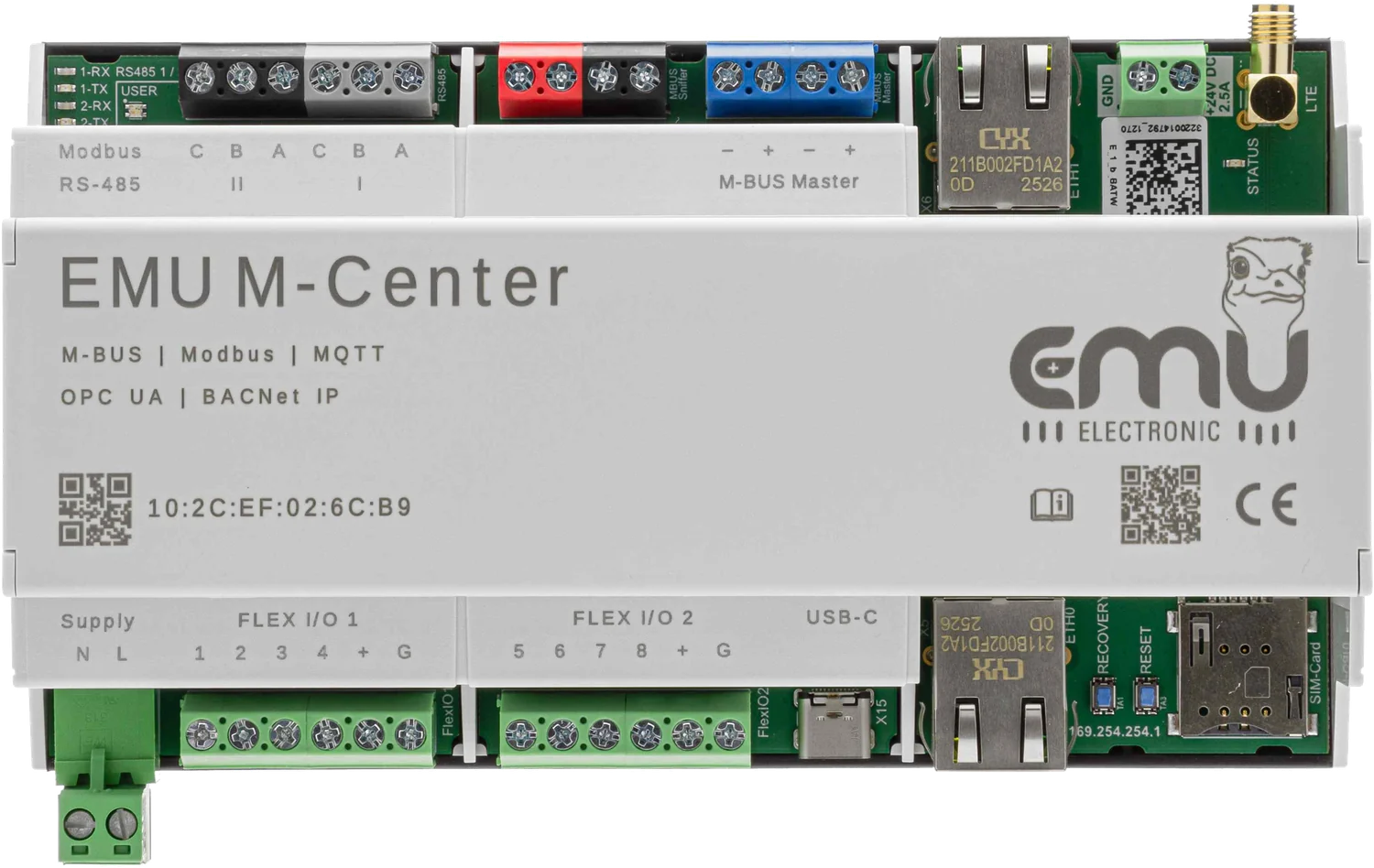
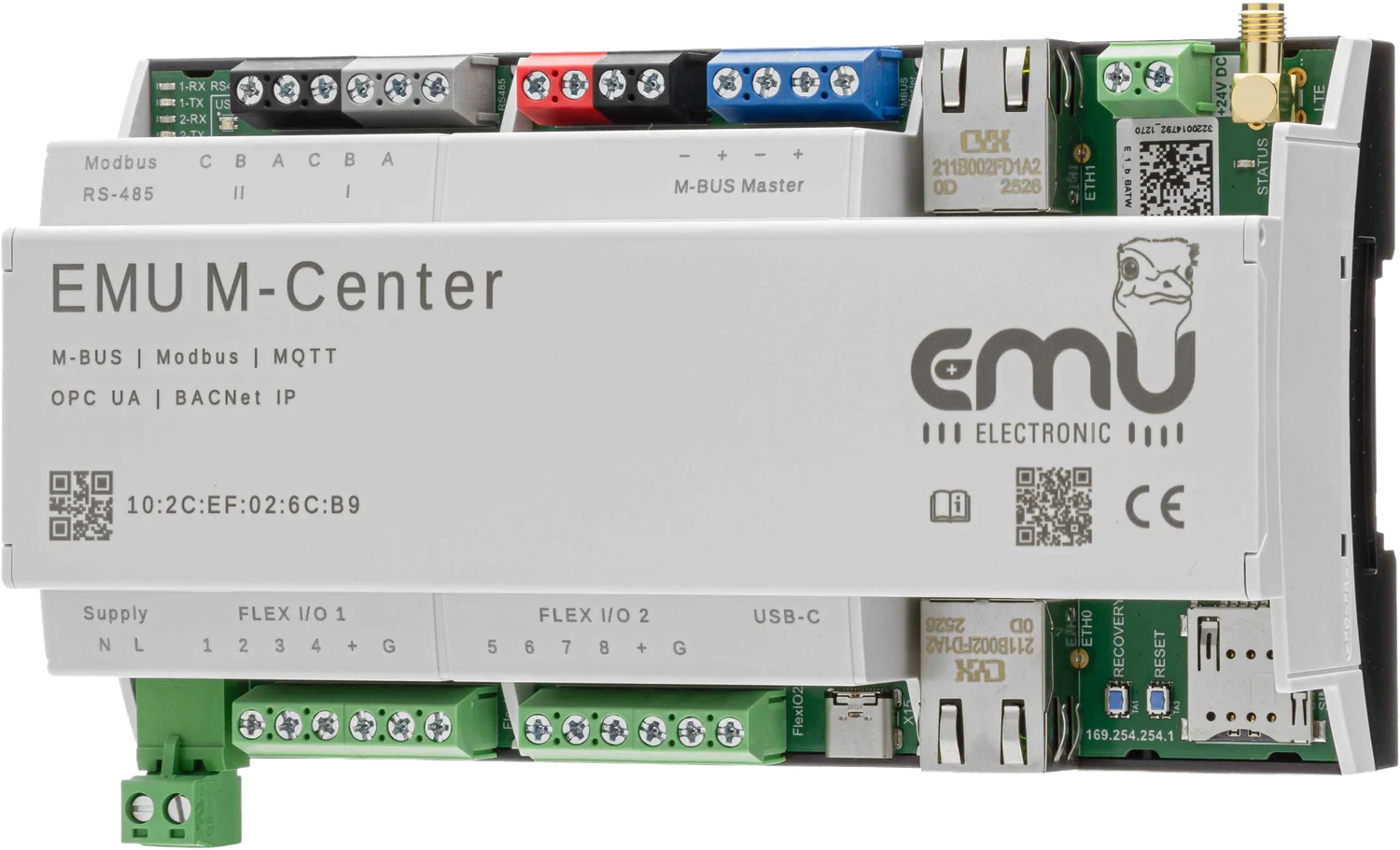
That is exactly where the M-Center sits. It does not only translate between protocols; it takes on the role nobody else has: the authority that knows which meters exist, when each last answered and where a gap has appeared.
At the same time, not one after another
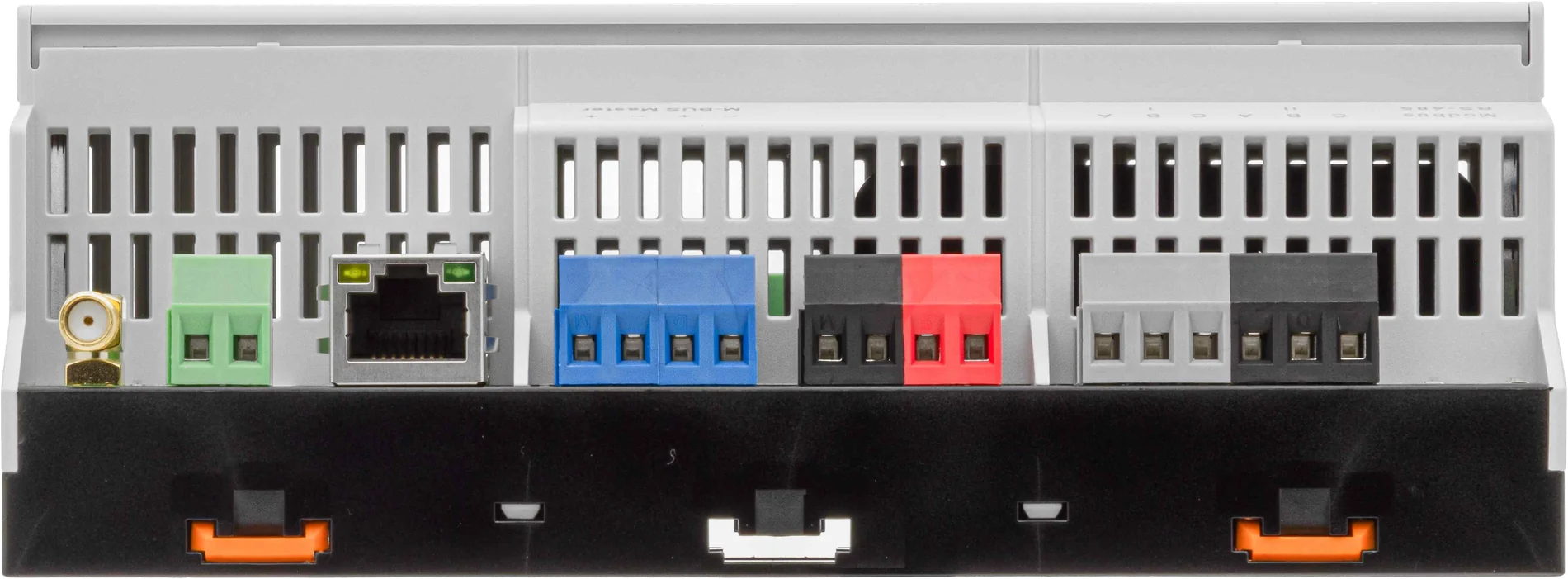
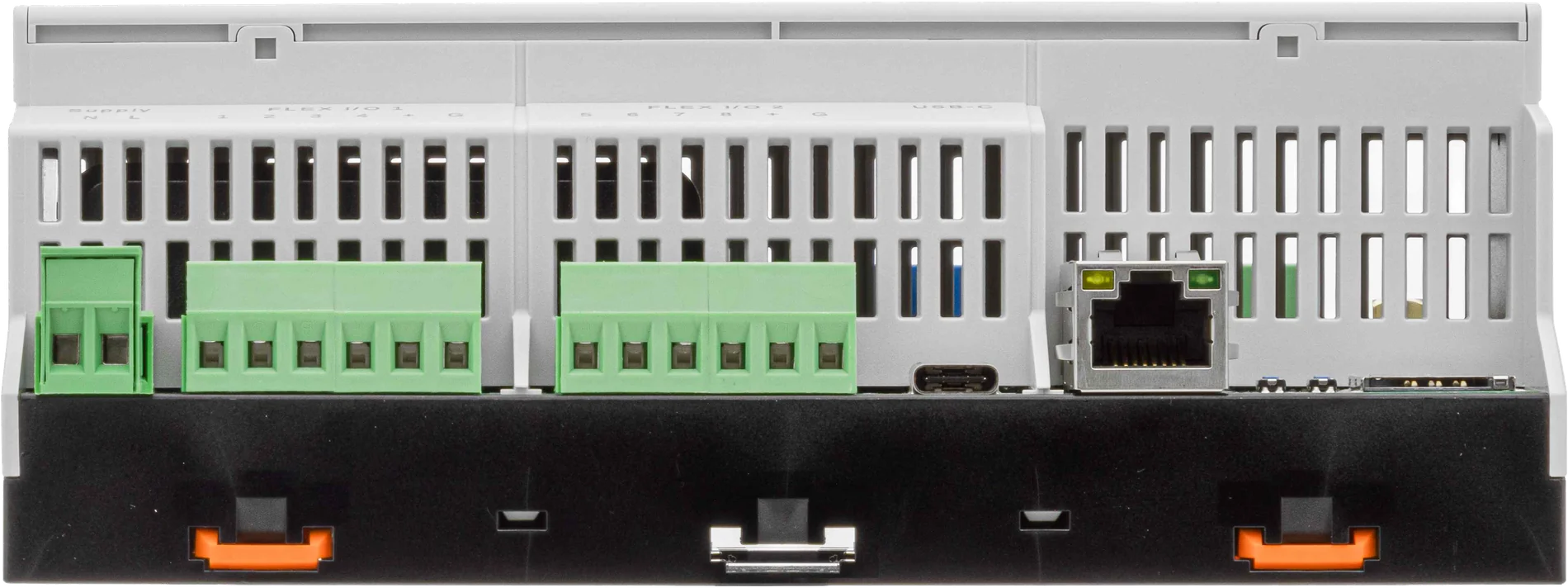
The second point is multiple use. When a control system polls a Modbus segment, it effectively blocks it for everyone else. The M-Center reads once and serves several target systems in parallel – building management over BACnet IP or OPC UA, cloud and dashboards over MQTT, billing via CSV, Excel or JSON by (s)FTP and email. A new target system means one configuration, not a second set of wiring.
Handover without loss of knowledge
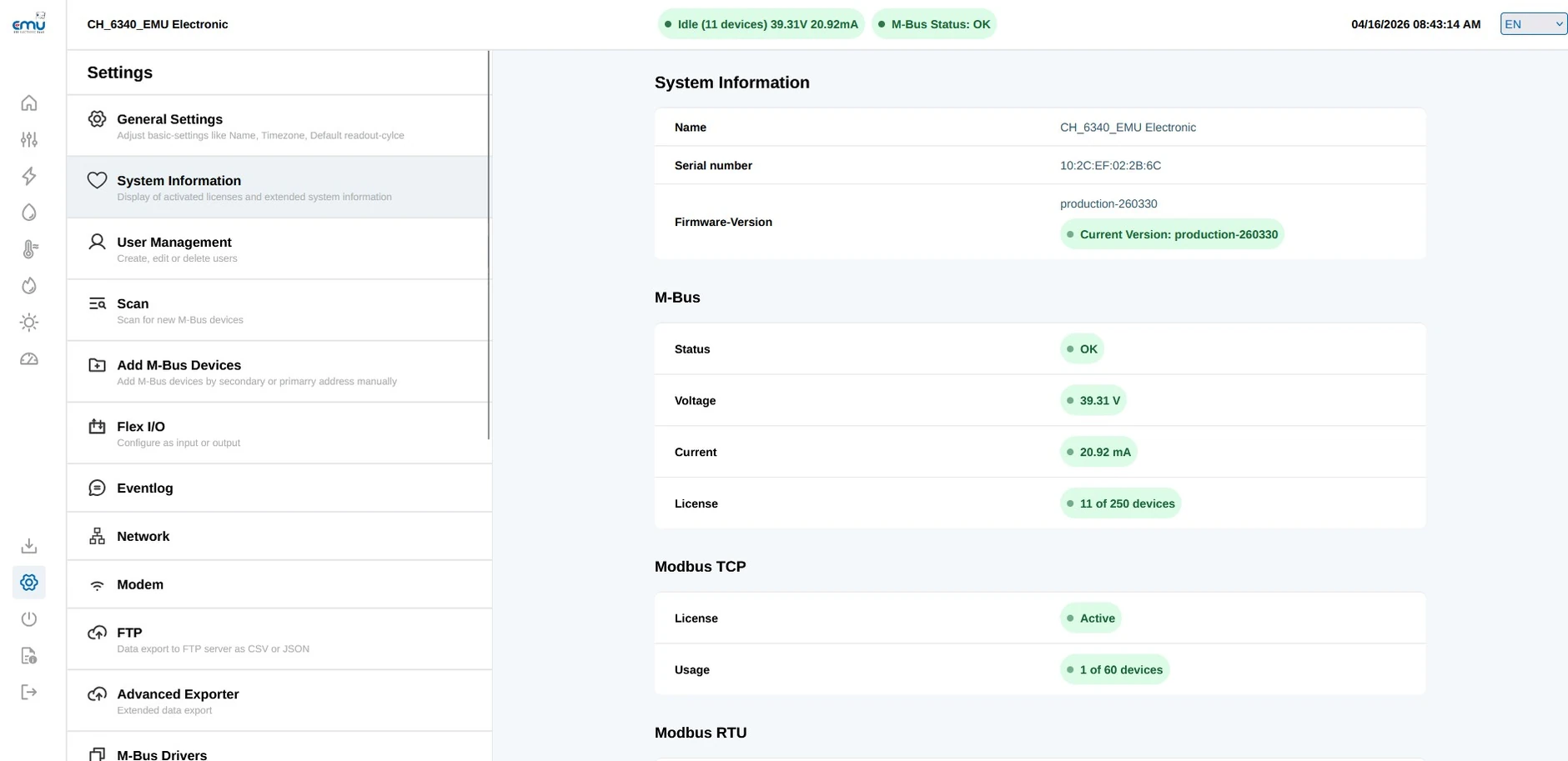
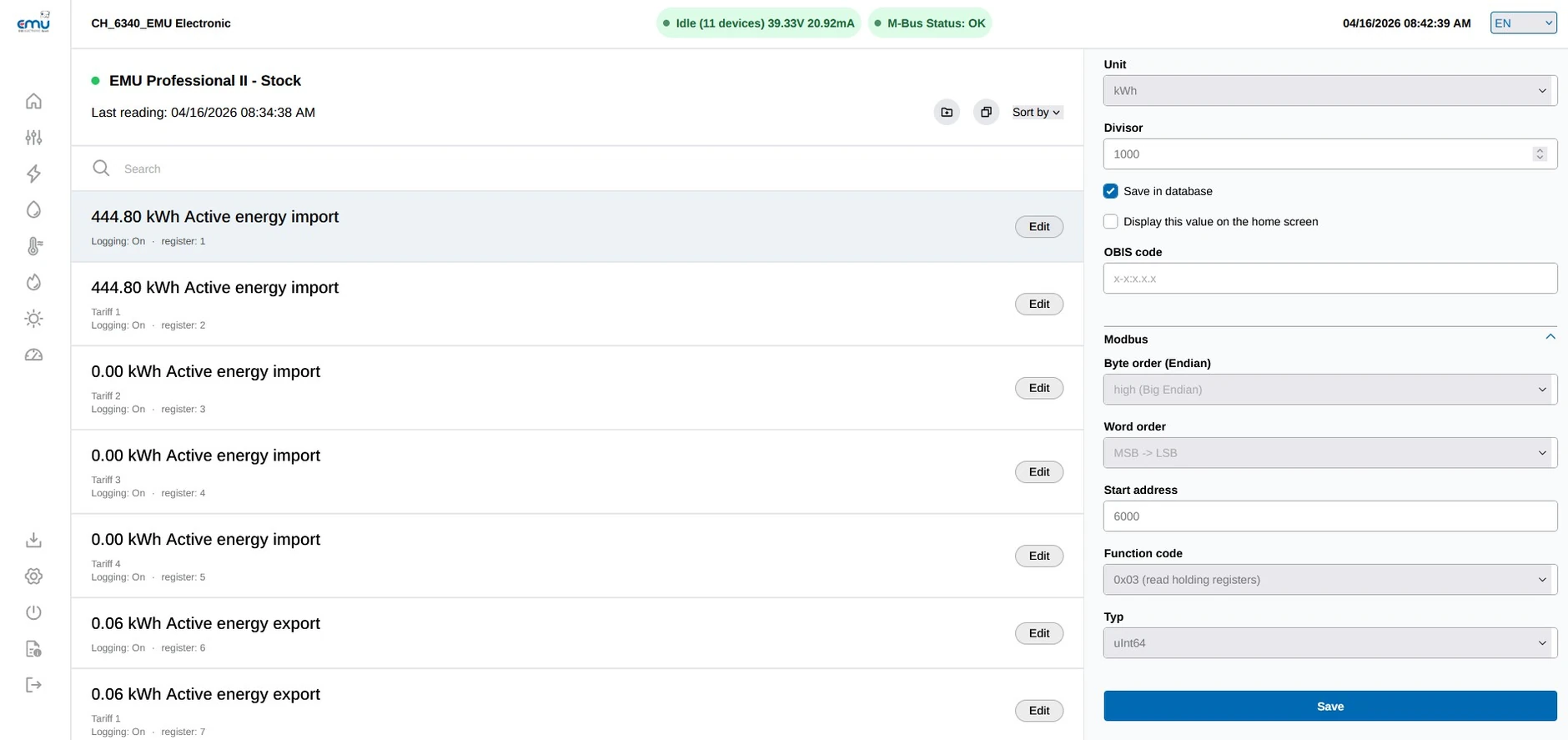
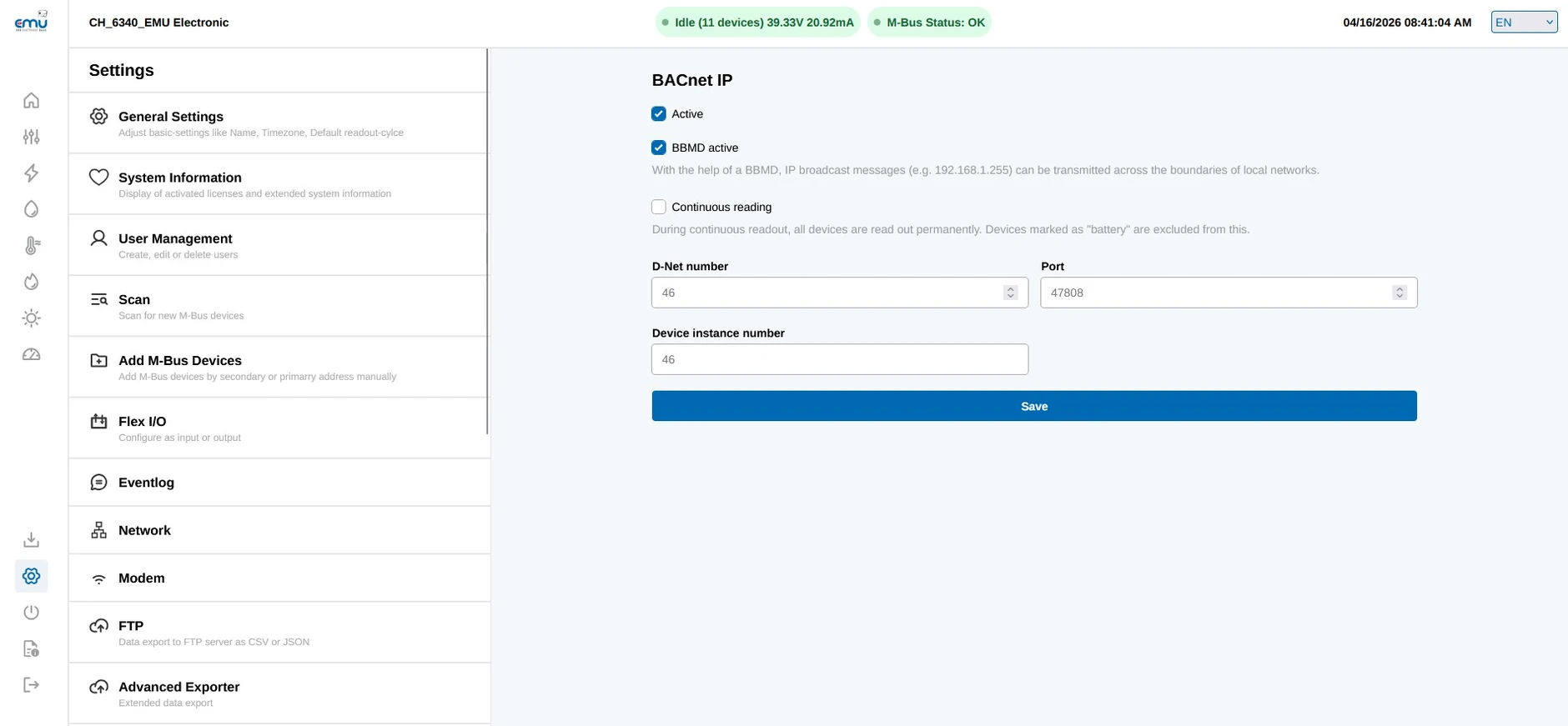
The third point is unspectacular but decides how operation goes: everything runs in a web browser, with no local PC software. What the installer set up is exactly what the operator sees – there is no computer in the cabinet holding the only copy of the configuration.
What projects founder on
Almost never the radio link or the bus layout, almost always the fact that a reading quietly fails for months and only shows up in the annual billing. That is why error flags, communication faults and outliers are monitored and logged around the clock.